How to boost metabolism naturally: the Novuburn 2026 guide
Updated September 2026 · reviewed by the Novuburn Research Team. We are an independent information resource, not a medical provider, and this article is educational rather than medical advice.
To boost your metabolism naturally means to protect and gently raise the energy your body spends each day — not with a pill or a trick, but with a handful of habits that compound: eating enough protein, building and keeping muscle, moving often, sleeping well and staying hydrated. This guide walks through each lever in plain language, in order of impact, and shows where a BHB and MCT capsule like Novuburn can play a supporting role in a low-carb routine.
How to boost metabolism naturally, in one place.
- The honest truth
- You can support and protect your metabolic rate, but you cannot dramatically override it. The wins are real, steady and behavioural — not magic.
- Biggest lever
- Eat enough protein and keep the muscle you have. Both raise the energy you burn at rest and blunt the slowdown from aging and crash diets.
- Move more, all day
- Everyday movement (walking, stairs, fidgeting) often burns more than a single workout. Add resistance training two to three times a week.
- Protect the basics
- Sleep, hydration and electrolytes set the stage; short nights and dehydration quietly work against you.
- Where Novuburn fits
- Ready-made BHB ketones, powdered MCT and electrolytes for steady energy on low-carb — a support to the habits, not a substitute.
If you have ever felt your energy stall by mid-afternoon and blamed a “slow metabolism,” you are asking the right question — just of the wrong villain. Metabolism is the sum of every process that turns food into energy; genetics, age and hormones set the baseline, but day-to-day habits move the dial more than most people expect. Below we work through the natural levers in order of impact and show where Novuburn fits.

What does it mean to boost your metabolism naturally?
Boosting metabolism naturally means increasing the total energy your body spends over a day through food, movement and recovery, rather than through stimulants or drastic measures. That daily total has three parts: your resting metabolic rate (by far the largest slice), the energy used to digest food, and the energy of all your movement — from formal exercise to fidgeting. (Levine et al., Science 1999) You cannot rewrite your resting rate overnight, but you can protect it and add to the other two — and that is where the wins live.
Why does metabolism slow down with age and dieting?
Metabolism slows mainly because we lose muscle, and muscle is metabolically expensive tissue that burns energy even at rest. (Zurlo et al., J Clin Invest 1990) From our thirties onward, most adults shed lean mass unless they actively train, and each repeated crash diet can trim a little more — which is why aggressive calorie cutting so often backfires. The encouraging flip side is that the biggest driver of the slowdown, muscle loss, is also the one most within your control.

What are the natural levers that actually work?
1. Eat enough protein at every meal
Protein is the single highest-return food lever for metabolism, for two reasons. First, your body spends more energy digesting protein than fat or carbohydrate — the thermic effect — so a protein-forward plate burns a little more just being processed. Second, adequate protein preserves the muscle that carries most of your resting metabolic rate, especially while losing weight. (Leidy et al., Am J Clin Nutr 2015) Anchor each meal with a clear source such as eggs, fish, poultry, Greek yogurt, tofu or a quality protein powder.
2. Build and keep muscle with resistance training
Resistance training is the most durable way to protect your metabolic rate, because it directly counters the muscle loss that drives the age-related slowdown. Two to three sessions a week — bodyweight, bands, dumbbells or machines — are enough to start. The point is not to become a bodybuilder; it is to keep the calorie-hungry tissue you have and, ideally, add a little. Paired with enough protein, strength work is the closest thing to a genuine long-term metabolism “booster.” Supplements sold as metabolic shortcuts rarely match those habits, as our comparison of berberine versus BHB shows.
3. Move more outside the gym (NEAT)
Non-exercise activity — walking, standing, taking the stairs, chores, even fidgeting — is one of the largest and most flexible parts of daily energy use, and it varies enormously between people. Spread across the whole day, it often adds up to more than a single workout. Practical wins: a short walk after meals, a standing phone habit, and a daily step target you can actually hit.
4. Sleep and manage stress
Sleep is the quiet foundation of a healthy metabolism. Short or broken nights disrupt appetite hormones, push cravings toward quick carbohydrates, and sap the energy that would otherwise go into movement, while chronic stress adds to the problem through elevated cortisol. Protecting seven to nine hours and a consistent bedtime does more for day-to-day energy than most supplements ever will.
5. Hydrate and mind your electrolytes
Water is involved in nearly every metabolic reaction, and even mild dehydration can leave you flat and foggy. On low-carb this matters doubly, because falling insulin makes your kidneys shed sodium, magnesium and potassium along with water. Drinking to thirst and replacing those minerals keeps energy steady — our guide to beating keto flu naturally covers this in detail.
See the exact dose in Novuburn →
Which habits move the dial most?
Not every “metabolism hack” is worth your attention. This table ranks the natural levers by how much they realistically affect daily energy use, so you can spend effort where it pays.
| Natural lever | How it helps metabolism | Realistic impact |
|---|---|---|
| Protein at every meal | Higher thermic effect; preserves muscle | High — and easy to start today |
| Resistance training | Builds and keeps calorie-hungry muscle | High over months; most durable |
| Daily movement (NEAT) | Large, flexible share of daily burn | Medium–high; very flexible |
| Sleep & stress | Regulates appetite and energy for movement | Medium; foundational |
| Hydration & electrolytes | Supports every metabolic reaction | Low–medium; prevents drag |
| Coffee / green tea | Small caffeine-driven lift | Low; short-lived |
How does keto or low-carb eating affect metabolism?
A keto or low-carb diet shifts your body toward burning fat and ketones for fuel, and it tends to be naturally protein- and satiety-forward — which makes the fundamentals above easier to sustain. Steadier blood sugar means fewer crashes and cravings, so many people find it easier to move, train and skip the mid-afternoon snack spiral. What it does not do is grant a large, automatic metabolic advantage. Think of keto metabolism as a helpful context for good habits, not a shortcut past them.
Where does Novuburn fit into a natural metabolism routine?
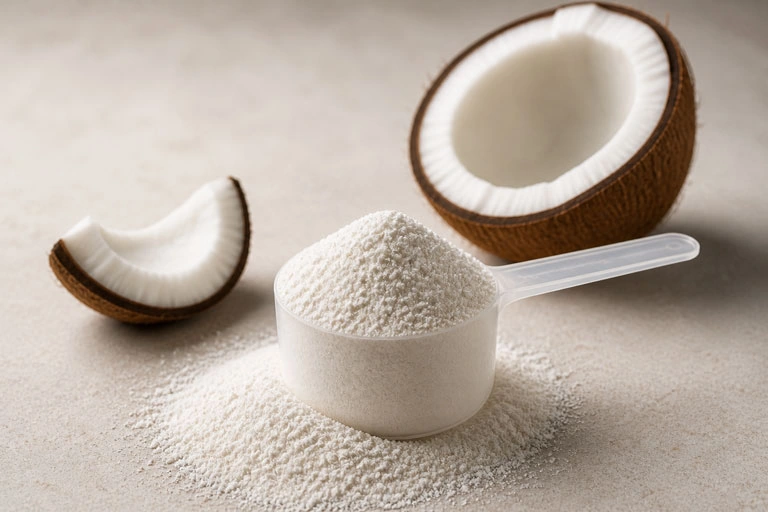
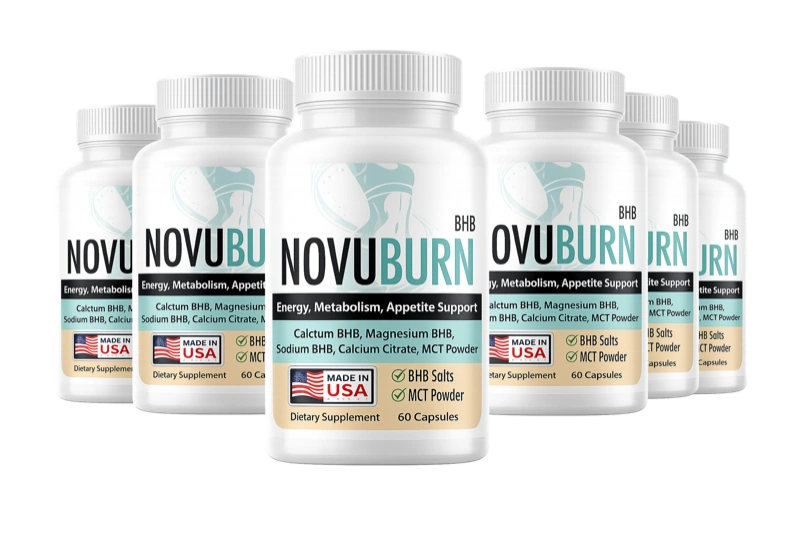
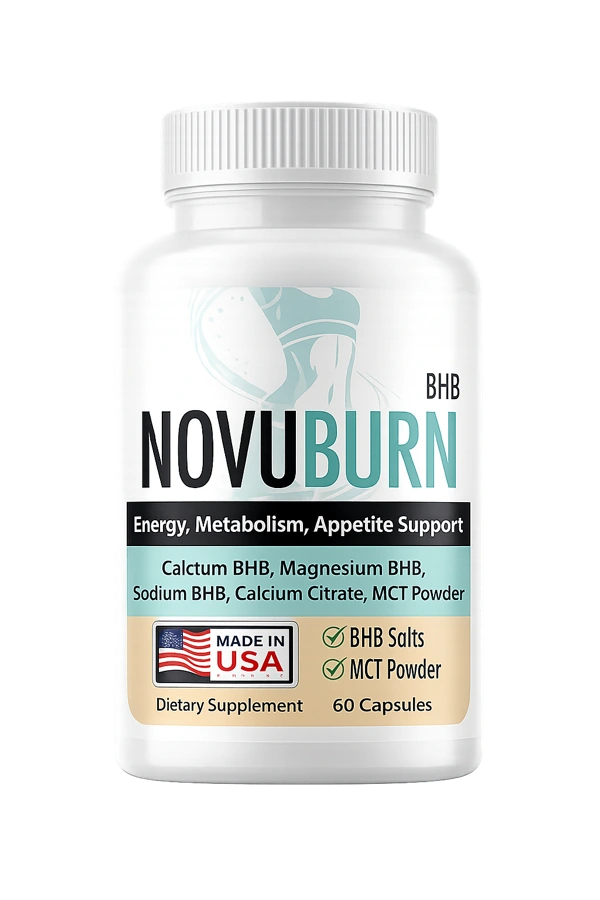
Novuburn is a daily keto-support capsule designed to sit alongside the fundamentals, not replace them. It is built on a Tri-Salt BHB complex that binds beta-hydroxybutyrate to calcium, magnesium and sodium — so one serving supplies ready-made ketone fuel and returns three of the minerals a low-carb diet tends to flush. Powdered MCT adds a fast-converting second fuel source, and a botanical stack rounds out the formula. In practice, that means steadier energy to do the protein-forward, muscle-building, keep-moving work that boosts metabolism naturally. It is a support, not a weight-loss drug.
Fuel the habits that raise your burn
Novuburn pairs a Tri-Salt BHB complex with powdered MCT and electrolytes in one daily capsule — steady fuel for the protein, movement and strength work that support metabolism. The six-bottle bundle is best value at $49 per bottle, with free U.S. shipping and a 60-day guarantee.
Check today's Novuburn pricing — from $49/bottleWhat does a simple daily metabolism routine look like?
The best routine is the one you will actually repeat. The framework below stacks the highest-impact levers into an ordinary day — anchor each meal with protein, lift two to three times a week, walk after meals, take Novuburn with breakfast, and protect a consistent bedtime. None of these is dramatic on its own; together, repeated, they are what a natural metabolism boost looks like. Because a steady routine builds over weeks, many people choose a multi-month supply — compare the packages and pricing, or read our full Novuburn review first.
| Time of day | Metabolism habit | Why it helps |
|---|---|---|
| Morning | Protein breakfast + Novuburn (2 capsules) | Thermic effect, satiety, steady ketone fuel |
| Midday | Protein lunch + a post-meal walk | Preserves muscle; lifts everyday movement |
| Afternoon | Water with a pinch of salt; short movement break | Prevents the dehydration and slump drag |
| Evening | Resistance session (2–3×/week) + protein dinner | Builds and keeps calorie-hungry muscle |
| Night | Consistent bedtime, 7–9 hours | Regulates appetite hormones and next-day energy |
When should you talk to a doctor?
Natural habits are for generally healthy adults, not a substitute for medical care. If you feel persistently exhausted, are gaining or losing weight without explanation, or suspect a thyroid or hormonal issue, see a healthcare professional — a genuinely slow metabolism from a medical cause needs proper evaluation. Speak with your doctor before starting keto or a new supplement if you are pregnant or nursing, under 18, take medication, or have a diagnosed condition.
Frequently asked questions
Can you really boost your metabolism naturally?
You can support and protect your metabolic rate naturally, but you cannot dramatically override it. The reliable levers are eating enough protein, building and keeping muscle, moving often through the day, sleeping well and staying hydrated. These raise the energy your body spends and slow the decline that comes with aging and crash dieting.
What foods help boost metabolism naturally?
Protein has the largest measurable effect because digesting it burns more energy than digesting fat or carbohydrate, and it helps preserve calorie-hungry muscle. Coffee and green tea give a small, short-lived lift from caffeine. No single food or spice melts fat, so the win comes from a protein-forward pattern you can keep up rather than any one ingredient.
Does building muscle increase metabolism?
Yes, though modestly. Muscle is more metabolically active at rest than fat, and resistance training plus adequate protein preserve the lean mass that carries much of your resting metabolic rate. Just as important, strength work offsets the muscle and metabolic decline that otherwise accompanies aging and repeated dieting.
How does keto or low-carb eating affect metabolism?
Low-carb eating shifts your body toward burning fat and ketones for fuel and tends to be protein- and satiety-forward, which can make a steady-energy routine easier to sustain. It does not create a large metabolic advantage on its own, and the same fundamentals — protein, muscle, movement and sleep — still do the heavy lifting.
Where does Novuburn fit into a natural metabolism routine?
Novuburn is a daily keto-support capsule built on a Tri-Salt BHB complex, powdered MCT and a botanical stack. It supplies ready-made ketone fuel and electrolytes to support steady energy during low-carb eating. It is a support to the fundamentals — food, movement and sleep — not a replacement for them, and it is not a weight-loss drug.
How long before natural metabolism habits make a difference?
Energy, appetite and sleep often feel steadier within one to two weeks, while changes in muscle and body composition unfold over months of consistent training and adequate protein. Metabolism responds to sustained habits rather than short bursts, so consistency matters more than intensity. Individual results vary.
Try Novuburn risk-free for 60 days →
Novuburn is a dietary supplement, not a treatment for any medical condition. These statements have not been evaluated by the Food and Drug Administration. This product is not intended to diagnose, treat, cure or prevent any disease. Always consult a qualified healthcare professional about your individual needs.
References & further reading
- Harvard T.H. Chan School of Public Health. The Nutrition Source — Protein. nutritionsource.hsph.harvard.edu/what-should-you-eat/protein
- Levine JA, Eberhardt NL, Jensen MD. Role of nonexercise activity thermogenesis in resistance to fat gain in humans. Science, 1999. pubmed.ncbi.nlm.nih.gov/9880251
- MedlinePlus, U.S. National Library of Medicine. Metabolism. medlineplus.gov/ency/article/002257.htm
- Mayo Clinic. Metabolism and weight loss: How you burn calories. mayoclinic.org/.../metabolism/art-20046508
- Examine.com. MCTs (Medium-Chain Triglycerides) — evidence-based summary. examine.com/supplements/mct
- National Center for Complementary and Integrative Health (NCCIH). Green Tea. nccih.nih.gov/health/green-tea
These references describe the ingredients and habits in general terms and do not constitute evidence that any product treats, cures or prevents any condition.
Keep reading: MCT oil vs powder for keto energy · BHB salts and exogenous ketones explained · back to the Novuburn blog · homepage.