Berberine vs BHB for weight loss: how Novuburn compares
Updated September 2026 · reviewed by the Novuburn Research Team. We are an independent information resource, not a medical provider, and this article is educational rather than medical advice.
Berberine vs BHB is not really a contest, because the two do different jobs: berberine is a plant compound studied for how it nudges blood-sugar and metabolic signalling over weeks of daily use, while BHB is an exogenous ketone that supplies ready-made fuel and partners with a low-carb diet. This comparison unpacks how each one works, what the evidence honestly shows, and why Novuburn is built around BHB and electrolytes rather than the berberine capsule flooding your feed.
Berberine vs BHB, in one honest paragraph.
- The short version
- Berberine and BHB are not rivals — berberine works slowly on metabolic signalling, while BHB is fast fuel for a keto diet. Neither replaces the other, and neither replaces diet.
- Berberine's job
- A daily plant alkaloid studied mainly for blood-sugar and lipid markers; it takes weeks and needs medical caution if you take medication.
- BHB's job
- An exogenous ketone that raises blood ketones within an hour or two, supporting energy and clarity as your body adapts to low-carb.
- Where Novuburn sits
- Novuburn uses a Tri-Salt BHB complex with MCT and botanicals — the fuel-and-electrolyte side of the equation, not berberine.
Two supplements dominate the weight-loss conversation right now, and they could hardly be more different. On one side is berberine, the yellow plant compound that social media nicknamed “nature's Ozempic” — a label that says more about marketing than about the research. On the other is BHB, the beta-hydroxybutyrate ketone at the heart of the keto movement. (Evans et al., J Physiol 2017) Below we compare them fairly, and show where Novuburn deliberately places its bet.
What is the real difference between berberine and BHB?
The core difference is timing and target: berberine is a slow-acting metabolic modulator, while BHB is a fast-acting fuel source. Berberine is a bioactive compound extracted from plants such as goldenseal and barberry, and it is taken daily over weeks because its effects on glucose and lipid markers build gradually. BHB is a ketone your own liver makes on a low-carb diet, and taking it as a supplement raises circulating ketones within a couple of hours. One works on the body's signalling machinery over time; the other simply hands your cells fuel they can burn today. Confusing the two — or expecting BHB to do berberine's job, or vice versa — is the single most common mistake shoppers make.
What is berberine and what does it do?
Berberine is a plant alkaloid that appears to activate an enzyme called AMPK, sometimes described as the cell's metabolic master switch. Traditional systems of medicine used berberine-rich plants for centuries, and modern research has focused on its influence over blood sugar, insulin sensitivity and blood lipids. It is important to be precise here: most of the interest in berberine for weight loss is indirect, flowing from its effects on metabolic markers rather than from large, high-quality trials showing meaningful fat loss on its own. (Yin et al., Metabolism 2008) The viral “nature's Ozempic” framing overstates what the evidence supports.
What does the evidence on berberine actually show?
The honest summary is that berberine has reasonable evidence for modestly improving fasting blood glucose and some lipid markers, and weaker, more mixed evidence for weight loss specifically. (Lan et al., J Ethnopharmacol 2015) Reviews on databases such as Examine and PubMed describe small-to-moderate effects on metabolic measures in people with elevated blood sugar, typically at doses split across the day with meals. Because berberine can interact with medications — particularly those for diabetes and blood pressure — and can cause digestive upset, it is a compound to use thoughtfully and to clear with a doctor, not to grab on impulse because a video promised a shortcut.
What are BHB salts and how do they work?
BHB salts are beta-hydroxybutyrate bound to minerals, and they deliver ready-made ketone fuel that your brain and muscles can use immediately. On a ketogenic diet your liver converts fat into BHB; an exogenous BHB supplement short-circuits that wait by putting the ketone straight into your bloodstream. In practice this means steadier energy and clearer focus during the low-carb adaptation window, when your own ketone production has not yet caught up with demand. Because the BHB is usually salted to calcium, magnesium and sodium, a good BHB supplement also returns some of the electrolytes a low-carb diet tends to flush — a two-for-one that berberine does not offer. For a deeper dive, see our explainer on BHB salts and exogenous ketones.
Berberine vs BHB: which one is right for your goal?
The choice comes down to how you eat and what you want the supplement to do. If you are following a low-carb or keto diet and want smoother energy through adaptation, BHB is the natural fit. If your interest is metabolic markers over the longer term and you are prepared to take a compound daily with medical oversight, berberine is the one that has been studied for that. The table below lays the two side by side.
| Feature | Berberine | BHB (exogenous ketones) |
|---|---|---|
| What it is | Plant alkaloid extract | Ketone body, salted to minerals |
| Main mechanism | AMPK / metabolic signalling | Ready-made cellular fuel |
| Speed of effect | Weeks of daily use | Within 1–2 hours |
| Best paired with | Any diet; often for glucose markers | Low-carb / keto diet |
| Electrolyte bonus | None | Yes, via calcium/magnesium/sodium salts |
| Medication caution | Higher — check with a doctor | Lower, but still worth checking |
Want the fuel side, done right?
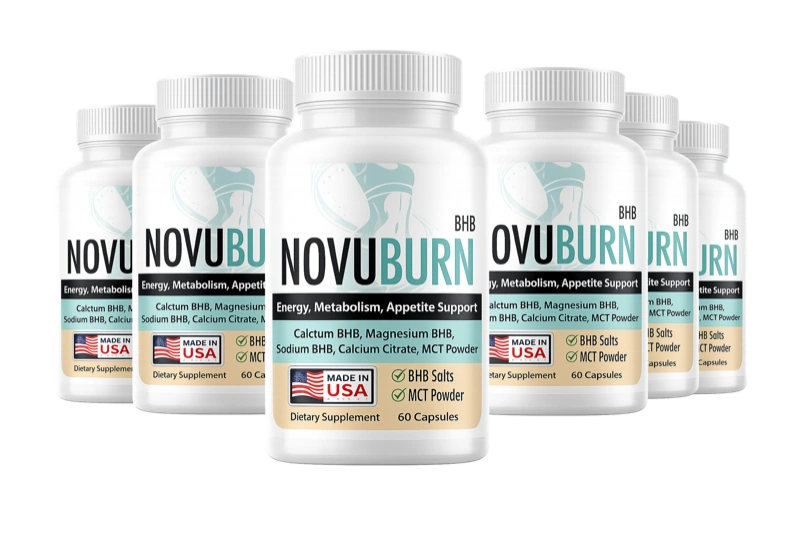
Novuburn pairs a Tri-Salt BHB complex with powdered MCT and a botanical stack in one daily capsule — the ketone-and-electrolyte lever, not the berberine one. See the exact dose in Novuburn on the label.
See the exact dose in Novuburn — from $49/bottleWhere does Novuburn fit — berberine, BHB, or both?
Novuburn is a BHB-and-electrolyte formula, not a berberine product, and that is a deliberate design choice. Its Tri-Salt BHB complex binds beta-hydroxybutyrate to calcium, magnesium and sodium, so a single serving supplies exogenous ketones and returns three of the minerals low-carb eating tends to deplete. Powdered MCT adds a second, fast-converting source of ketone fuel, and a botanical amplifier stack rounds out the formula. In the berberine-vs-BHB framing, Novuburn plants itself firmly on the BHB side — the fuel-and-hydration tool for people who are actually eating low-carb, rather than a stand-alone metabolic modulator.
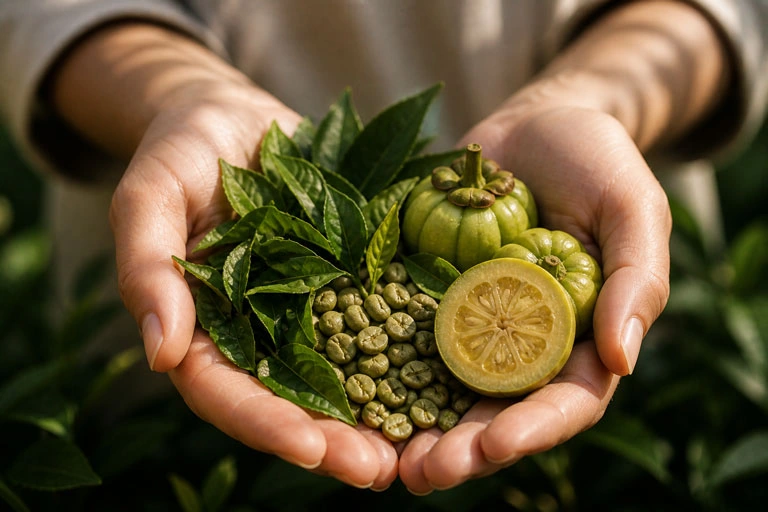
| Component in Novuburn | Role | Comparable to berberine? |
|---|---|---|
| Tri-Salt BHB complex | Exogenous ketone fuel + 3 electrolytes | No — different mechanism |
| Powdered MCT | Fast-converting ketone precursor | No — fuel, not signalling |
| Botanical amplifier stack | Supporting botanicals | Partially — some plant compounds overlap in spirit |
| Electrolyte minerals | Replace what low-carb flushes | No — berberine offers none |
Can you take berberine and BHB together?
Because berberine and BHB act on entirely separate pathways, many people use them together rather than choosing one. Berberine works on metabolic signalling over weeks; BHB provides fuel the same day. There is no established interaction between the two in healthy adults, which is why a low-carb dieter might use a BHB formula like Novuburn for daily energy while separately discussing berberine with their doctor for glucose markers. The caveat is real, though: berberine's medication interactions mean the “stack” decision belongs with a healthcare professional, not a comment section.
How do you use berberine and BHB safely?
Safe use starts with matching each supplement to its evidence and respecting its cautions. Berberine is typically taken in divided doses with meals and is best cleared with a doctor if you take any prescription medication, are pregnant or nursing, or have a diagnosed condition; digestive upset is its most common side effect. BHB is generally well tolerated, works best alongside a genuinely low-carb diet, and is most useful during the adaptation window — our guide to beating keto flu naturally covers that phase in detail. Neither compound is a substitute for the fundamentals: food quality, protein, sleep and movement still do the heavy lifting.
Frequently asked questions
Is berberine or BHB better for weight loss?
Neither is strictly better because they do different jobs. Berberine is studied mainly for how it influences blood-sugar and metabolic markers over weeks of daily use, while BHB is an exogenous ketone that supplies ready-made fuel and pairs with a low-carb diet. The right choice depends on your goal and how you eat, and results vary from person to person.
Can you take berberine and BHB together?
Many people do combine them because their mechanisms do not overlap: berberine works on metabolic signalling over time, and BHB offers immediate ketone fuel. There is no established interaction between the two in healthy adults, but you should check with a healthcare professional first, especially if you take blood-sugar or blood-pressure medication.
Does Novuburn contain berberine?
Novuburn is built around a Tri-Salt BHB complex, powdered MCT and a botanical amplifier stack rather than berberine. It is designed as a ketone-and-electrolyte support for a low-carb lifestyle. Always read the current Supplement Facts panel on the label for the exact ingredients and doses.
How long does berberine take to work compared with BHB?
Berberine is typically taken daily for several weeks before its metabolic effects are assessed, because it works gradually. BHB acts far faster, raising blood ketones within an hour or two of a serving, so its effect on fuel and clarity is felt the same day rather than accumulating over weeks.
Is berberine safe to take every day?
Berberine is generally well tolerated in studies, with digestive upset being the most common complaint, but it can interact with several medications and is not recommended in pregnancy or nursing. It should be used at studied doses and discussed with a doctor if you have a medical condition or take prescription drugs.
Do I need to be in ketosis for BHB to help?
You do not need to be in deep ketosis for exogenous BHB to raise blood ketone levels, but BHB fits best alongside a genuinely low-carb diet. Taking it while eating high-carb sends mixed fuel signals, so BHB is best thought of as a partner to keto eating rather than a shortcut around it.
Check today's Novuburn pricing →
Novuburn is a dietary supplement, not a treatment for any medical condition. These statements have not been evaluated by the Food and Drug Administration. This product is not intended to diagnose, treat, cure or prevent any disease. Always consult a qualified healthcare professional about your individual needs.
References & further reading
- National Center for Complementary and Integrative Health. Goldenseal (a common source of berberine). nccih.nih.gov/health/goldenseal
- Lan J, et al. Meta-analysis of the effect and safety of berberine in the treatment of type 2 diabetes mellitus, hyperlipemia and hypertension. J Ethnopharmacol, 2015. pubmed.ncbi.nlm.nih.gov/25498346
- Examine.com. Berberine — evidence-based summary. examine.com/supplements/berberine
- Examine.com. Ketones (Exogenous) — evidence-based summary. examine.com/supplements/ketones
- National Institutes of Health, Office of Dietary Supplements. Magnesium — Fact Sheet for Health Professionals. ods.od.nih.gov/factsheets/Magnesium-HealthProfessional
These references describe the ingredients in general terms and do not constitute evidence that any product treats, cures or prevents any condition.
Keep reading: BHB salts and exogenous ketones explained · MCT oil vs powder for keto energy · back to the Novuburn blog · read the full Novuburn review.