Green coffee bean extract weight loss: how chlorogenic acid earns its place in Novuburn
Updated September 2026 · reviewed by the Novuburn Research Team. We are an independent information resource, not a medical provider; this article is educational, not medical advice.
Green coffee bean extract is a concentrate made from coffee beans that have never been roasted, prized for a plant polyphenol called chlorogenic acid that ordinary coffee mostly loses in the roaster. That single compound is why green coffee shows up in metabolism research at all — and why it sits in the botanical amplifier layer of Novuburn rather than in your morning mug. This guide explains what the extract is, what chlorogenic acid does, what the weight-loss evidence honestly shows, and where a botanical like this fits alongside a BHB-and-MCT core. The other appetite botanical in that layer is covered in our guide to garcinia cambogia for weight loss. A similar gap between hype and evidence shows up in raspberry ketone.
Does green coffee bean extract help with weight loss, and why is it in Novuburn?
- What it is
- An unroasted-coffee concentrate standardised for chlorogenic acid, the polyphenol that roasting destroys.
- The evidence
- Human trials suggest at most a modest effect on body weight, and the research is small, short and mixed — a nudge, not a cure.
- How it may work
- Chlorogenic acid is linked to slower gut absorption of glucose and to antioxidant activity in lab and early clinical work.
- Its role in Novuburn
- A supporting botanical around the Tri-Salt BHB complex and powdered MCT — complementary, not the main event. (Mumme & Stonehouse, J Acad Nutr Diet 2015)
Green coffee bean extract is one of the most talked-about weight-loss botanicals of the last decade, which means it carries more hype than most. The aim here is to separate the plausible from the oversold: to describe the plant chemistry plainly, report the human evidence as it stands, and be clear about the supporting role the extract plays. For the whole formula in context, the full Novuburn review lays out every layer.

What is green coffee bean extract?
Green coffee bean extract is a concentrate made from the raw, unroasted seeds of the coffee plant (Coffea). The heat that develops coffee's aroma also breaks down a large share of the beans' chlorogenic acid, so manufacturers start with green beans and standardise the result to a stated percentage of that polyphenol — commonly 45 to 50 percent. In short, green coffee bean extract is less a coffee product than a delivery vehicle for a specific plant chemical.
What is chlorogenic acid and why does it matter?
Chlorogenic acid is a family of plant polyphenols found in especially high amounts in unroasted coffee, and it is the compound that gives green coffee bean extract any biological interest at all. It sits in the same broad antioxidant class as the compounds in berries, tea and cocoa. In green coffee it has been studied for two main effects: an association with slower absorption of glucose from the gut after a meal, and antioxidant activity. Keep the register honest, though — these are mechanisms seen largely in lab models and small human studies, not proof that swallowing the compound reshapes your body. It is best understood as a plausible metabolic helper, not a lever that overrides diet.

How does green coffee affect metabolism?
Green coffee metabolism claims rest mainly on two proposed pathways. The first is glucose handling: chlorogenic acid appears to slow carbohydrate absorption in the small intestine, which in theory blunts the after-meal blood-sugar spike. (Onakpoya et al., Gastroenterol Res Pract 2011) The second is caffeine, which green beans still carry unless decaffeinated — and caffeine has a genuine, if small, effect on energy expenditure. People who call green coffee a "metabolism booster" usually blend these two ideas.
Does it slow sugar absorption?
Some short human studies report slightly lower post-meal glucose with chlorogenic acid — the most-cited mechanism behind green coffee's reputation. But the effect sizes are small and do not always translate into meaningful changes on the scale. Treat "slows sugar absorption" as a reasonable hypothesis with early support, not a settled fact.
Is the effect really just the caffeine?
It is a fair question. Because caffeine independently nudges energy expenditure, it is hard to separate what chlorogenic acid does from what the caffeine in the same extract does. (Dulloo et al., Am J Clin Nutr 1989) Decaffeinated, standardised extracts exist partly to answer this, but they are less studied. The takeaway: if a product leans on green coffee for energy, some of that lift may simply be caffeine.
What does the weight-loss evidence actually show?
The honest summary is that the human weight-loss evidence for green coffee bean extract is weak and inconsistent. A frequently cited 2011 systematic review found the available trials few, small and of poor quality, with any effect on body weight modest at best. One of the most publicised early studies was later retracted, and the marketing built on it drew regulatory action. Small trials have since reported statistically significant but clinically modest reductions versus placebo. That places green coffee in the "may offer a small nudge for some people" category, not "proven fat-burner" — and anyone promising dramatic results from it alone is overselling the science.
| Claim you'll see | What the evidence supports | Honest verdict |
|---|---|---|
| Burns fat on its own | Small, short trials; one high-profile retraction | Overstated — no strong proof |
| Slows sugar absorption | Early human data on post-meal glucose | Plausible, effect small |
| Boosts metabolism | Partly the caffeine content | Modest; hard to isolate |
| Antioxidant support | Polyphenol activity in lab studies | Reasonable, non-specific |
| Curbs appetite | Weak, inconsistent human data | Unproven |
See the exact dose in Novuburn
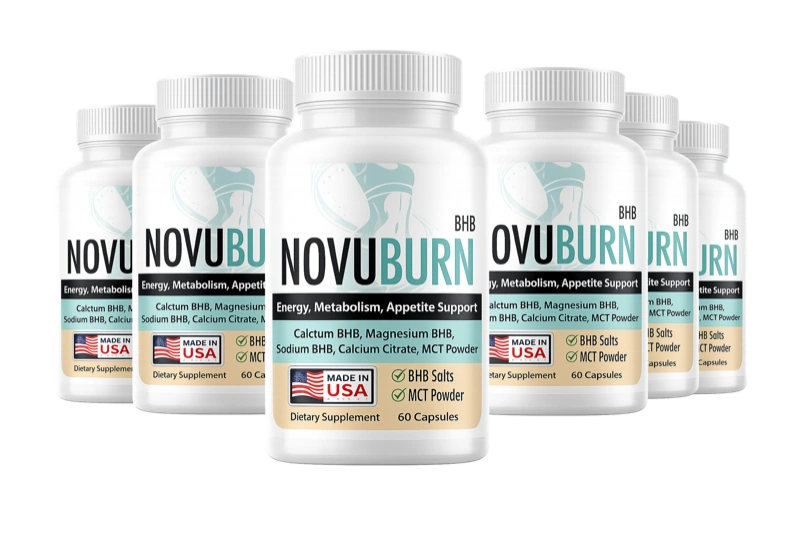
Green coffee bean extract is one botanical in Novuburn's amplifier layer, built around a Tri-Salt BHB complex and powdered MCT. The precise amount per serving is on the label — and the six-bottle bundle is the best value at $49 per bottle with free U.S. shipping and a 60-day guarantee.
Order Novuburn — from $49/bottleRoasted vs unroasted: why the beans stay green
Unroasted coffee is the entire reason green coffee bean extract exists as a distinct ingredient. A raw coffee bean is pale green and, by weight, far richer in chlorogenic acid than the dark bean from a roaster, which strips much of that polyphenol as temperatures climb. That is why you cannot simply brew a strong cup and expect the same compound profile, and why the extract does not taste like coffee. When a label specifies "green" or "unroasted" coffee standardised to chlorogenic acid, that wording tells you the ingredient was chosen for chemistry, not flavour.

Where does green coffee bean extract fit in Novuburn?
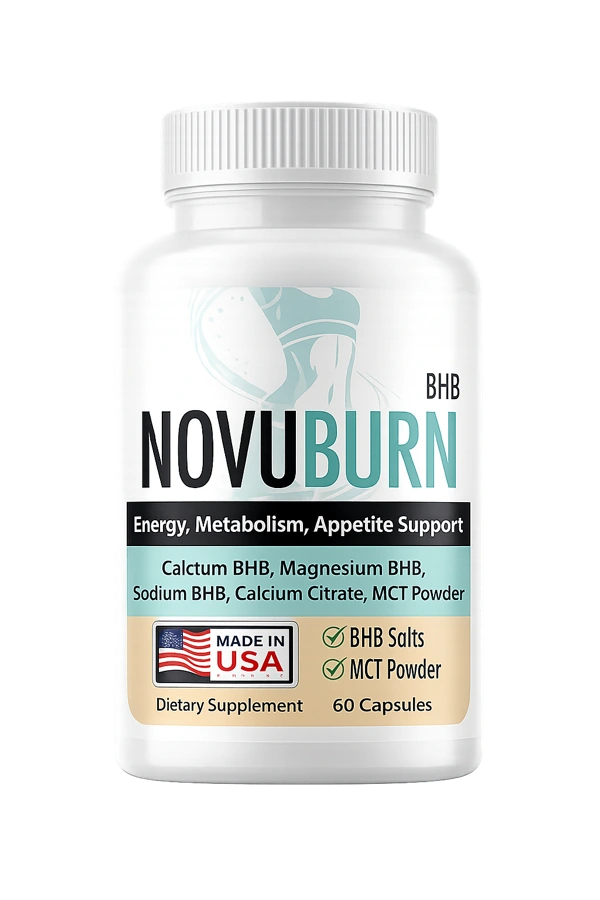
In Novuburn, green coffee bean extract is a supporting botanical, not the headline act. The formula is built in layers: at its centre is a Tri-Salt BHB complex that binds beta-hydroxybutyrate to calcium, magnesium and sodium, plus powdered MCT for a second, fast-converting source of ketone fuel. Around that core sits a botanical amplifier layer — a small set of plant compounds, green coffee among them, chosen to complement that foundation. The heavy lifting comes from BHB and MCT that match what a low-carb metabolism uses, while botanicals like chlorogenic acid add a modest layer on top. It is a supplement to a well-planned diet, not a shortcut around one.
| Layer | Component | Role in the formula |
|---|---|---|
| Core fuel | Tri-Salt BHB complex | Exogenous ketones plus three electrolytes |
| Core fuel | Powdered MCT | Fast-converting second ketone source |
| Amplifier | Green coffee bean extract | Chlorogenic-acid-rich supporting botanical |
| Amplifier | Other plant compounds | Round out the botanical layer |
To weigh green coffee against the parts that do the most work, read how BHB salts and exogenous ketones supply ready-made fuel, and compare MCT oil versus powder for keto energy to see why the powdered form is used here.
How much green coffee do you need, and is it safe?
Green coffee bean extract is generally well tolerated at supplement amounts, and most reported side effects trace back to its caffeine content rather than the chlorogenic acid itself. Study doses have varied widely, so the standardisation percentage matters as much as the raw milligrams. Because green beans retain caffeine unless decaffeinated, anyone sensitive to stimulants should count green coffee toward their daily total. As with any supplement, talk to your doctor first if you are pregnant or nursing, under 18, take medication, or have a diagnosed condition. This article describes the ingredient in general terms; it is not a promise of any specific result.
Frequently asked questions
What is green coffee bean extract?
Green coffee bean extract is a concentrate made from coffee beans that have not been roasted. Roasting develops flavour but destroys much of the beans' chlorogenic acid, so the unroasted extract is standardised to retain that compound — the reason green coffee is studied for metabolism rather than as a drink.
What does chlorogenic acid do?
Chlorogenic acid is a family of plant polyphenols found in high amounts in unroasted coffee. In laboratory and small human studies it is associated with slower absorption of glucose from the gut and antioxidant activity. The human weight-loss evidence is limited and mixed, so it is best viewed as a supporting botanical rather than a proven fat-burner.
Does green coffee bean extract actually cause weight loss?
The honest answer is that the evidence is weak. Some short trials reported modest reductions in body weight versus placebo, but many were small, brief or industry-funded, and a well-known set of results was later retracted. Green coffee bean extract may offer a small nudge for some people, but it is not a substitute for diet and activity.
How much caffeine is in green coffee bean extract?
Green coffee beans do contain caffeine, though extracts vary widely in how much they carry. Some are decaffeinated and standardised to chlorogenic acid only, while others retain natural caffeine. Anyone sensitive to stimulants should check the label and count green coffee toward their total daily caffeine.
Why does Novuburn use green coffee bean extract?
In Novuburn, green coffee bean extract sits in the botanical amplifier layer that surrounds the core Tri-Salt BHB complex and powdered MCT. It is included as a chlorogenic-acid-rich botanical to complement the fuel and electrolyte core, not as a standalone weight-loss drug. See the label for the exact amount per serving.
Is green coffee bean extract safe?
Green coffee bean extract is generally well tolerated in the amounts used in supplements, with side effects usually tied to its caffeine content, such as jitteriness or trouble sleeping. Talk to your doctor before using it if you are pregnant or nursing, take medication, have high blood pressure, or are sensitive to caffeine.
Check today's Novuburn pricing →
Novuburn is a dietary supplement, not a treatment for any medical condition. These statements have not been evaluated by the Food and Drug Administration. This product is not intended to diagnose, treat, cure or prevent any disease. Always consult a qualified healthcare professional about your individual needs.
References & further reading
- Onakpoya I, et al. The use of green coffee extract as a weight loss supplement: a systematic review and meta-analysis of randomised clinical trials. Gastroenterology Research and Practice, 2011. PubMed 20871849
- National Center for Biotechnology Information, PubChem. Chlorogenic acid — compound summary. pubchem.ncbi.nlm.nih.gov/compound/Chlorogenic-acid
- Examine.com. Green Coffee Extract — evidence-based summary. examine.com/supplements/green-coffee-extract
- National Institutes of Health, Office of Dietary Supplements. Dietary Supplements for Weight Loss — Fact Sheet. ods.od.nih.gov/factsheets/WeightLoss-HealthProfessional
These references describe the ingredient in general terms and do not constitute evidence that any product treats, cures or prevents any condition.
Keep reading: BHB salts and exogenous ketones explained · MCT oil vs powder for keto energy · back to the Novuburn blog · homepage.