Calcium citrate benefits in Novuburn: the keto mineral

Updated September 2026 · reviewed by the Novuburn Research Team. We are an independent information resource, not a medical provider, and this article is educational rather than medical advice.
Calcium citrate is a highly absorbable form of calcium in which the mineral is bound to citric acid, and it is the form that does not need stomach acid to dissolve — so it can be taken with or without food, at any time of day. (Wang et al., Food Nutr Res 2014) That property is exactly why it belongs inside a daily keto capsule. This guide explains what calcium citrate is, how it is absorbed, why a low-carb diet increases mineral turnover, and where the calcium in Novuburn’s Tri-Salt BHB complex fits.
Calcium citrate on keto, in one box.
- What it is
- Calcium bound to citric acid — a stable, well-absorbed salt that dissolves without stomach acid.
- Why it absorbs well
- Works with or without food and suits people on acid-reducing medication, unlike carbonate.
- Why keto needs it
- Low-carb eating lowers insulin and flushes sodium, water and companion minerals — raising turnover.
- The Novuburn role
- Calcium arrives inside the Tri-Salt BHB complex, with magnesium and sodium — not a lone megadose.
Most keto conversations obsess over sodium and magnesium and quietly forget calcium — yet the low-carb diet that makes BHB useful also nudges calcium out the door. (Bostock et al., Front Nutr 2020) Let us start with the chemistry, then see how Novuburn applies it.
What exactly is calcium citrate?
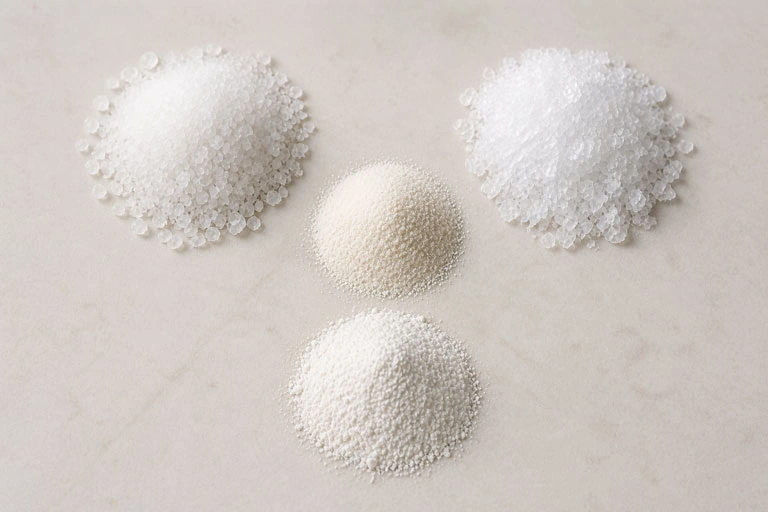
Calcium citrate is the calcium salt of citric acid: one calcium ion held by citrate, the acid that gives citrus fruit its tartness. Pure calcium is too reactive to swallow alone, so supplements deliver it as a compound — carbonate, citrate, lactate, gluconate. Citrate stands out because it is already partly dissolved and needs little help to release its calcium. Roughly 21 percent of the compound is elemental calcium (the part that counts), lower than carbonate’s 40 percent, but citrate makes up for density with reliability: it dissolves and absorbs whether or not you have eaten.
How is calcium citrate absorbed?
Calcium citrate is absorbed in the small intestine and, crucially, does not depend on stomach acid to break apart first. Calcium carbonate needs an acidic stomach to dissolve, which is why the label says to take it with a meal; on an empty stomach, or if you use antacids or proton-pump inhibitors that lower stomach acid, absorption drops. Citrate sidesteps that, so it works on an empty stomach, first thing in the morning, or in a capsule taken with nothing but water. For a once-daily keto capsule people swallow at unpredictable times, that flexibility is the whole point.
| Calcium form | Elemental calcium | Needs food/acid? | Best for |
|---|---|---|---|
| Calcium citrate | ~21% | No — any time | Empty stomach, acid reducers, capsules taken anytime |
| Calcium carbonate | ~40% | Yes — with a meal | Getting the most calcium per gram, taken with food |
| Calcium lactate | ~13% | No | Sensitive stomachs; lower dose per tablet |
| Calcium gluconate | ~9% | No | Very gentle; large tablets needed for a full dose |
The practical takeaway: carbonate wins on density, citrate wins on convenience. Because Novuburn is taken whenever your morning allows — not strictly with a meal — how a calcium source behaves off-meal matters more than maximum milligrams per capsule.
See the exact dose in Novuburn →
Why does a keto diet increase mineral turnover?
A low-carb diet increases mineral turnover because cutting carbohydrates lowers insulin, and lower insulin tells the kidneys to release sodium and water — the famous “whoosh” of early keto weight, which is mostly fluid. The catch is that when sodium and water leave, they pull companion electrolytes — potassium, magnesium and calcium — with them. Over the first few weeks your body runs a higher mineral throughput than on a carb-heavy diet, and if intake does not keep up, the shortfall shows as the cramps, fatigue and headaches people call the keto flu.

Calcium belongs in that picture even though it gets less attention than sodium. It is essential for muscle contraction, nerve signaling and normal heart rhythm, and the body guards blood calcium tightly — if intake falls short, it draws on the skeleton to keep levels steady. That is a reason not to let calcium slide during a diet already increasing turnover, especially if dairy has been cut back for meat, eggs and low-carb vegetables. For the fuller adaptation story, see how to beat keto flu naturally.
Where does calcium citrate fit in Novuburn?
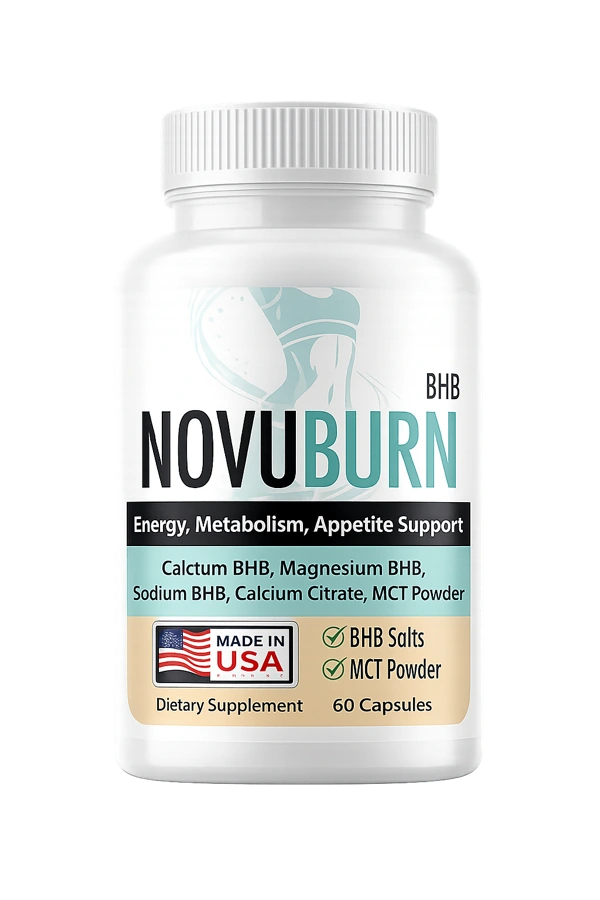
In Novuburn the calcium is not a standalone pill; it arrives bound into the Tri-Salt BHB complex, where beta-hydroxybutyrate is paired with calcium, magnesium and sodium. That design does two jobs at once: the BHB supplies exogenous ketones your brain and muscles can use, and the mineral partners — calcium among them — help replace the electrolytes a low-carb diet depletes. Rather than dosing one mineral heavily, the Tri-Salt approach spreads the load across the three keto most reliably drains. For the ketone side, see our explainer on BHB salts and exogenous ketones.
| Reasonable expectation | Not a claim we make |
|---|---|
| Helps replace calcium turned over faster on keto | Builds or restores bone density on its own |
| A well-absorbed calcium source you can take anytime | A treatment for osteoporosis or any condition |
| Supports normal muscle and nerve function | Prevents or cures cramps in everyone |
| Rounds out an electrolyte-aware keto routine | A substitute for a balanced, calcium-containing diet |
Ketones and minerals, in one capsule
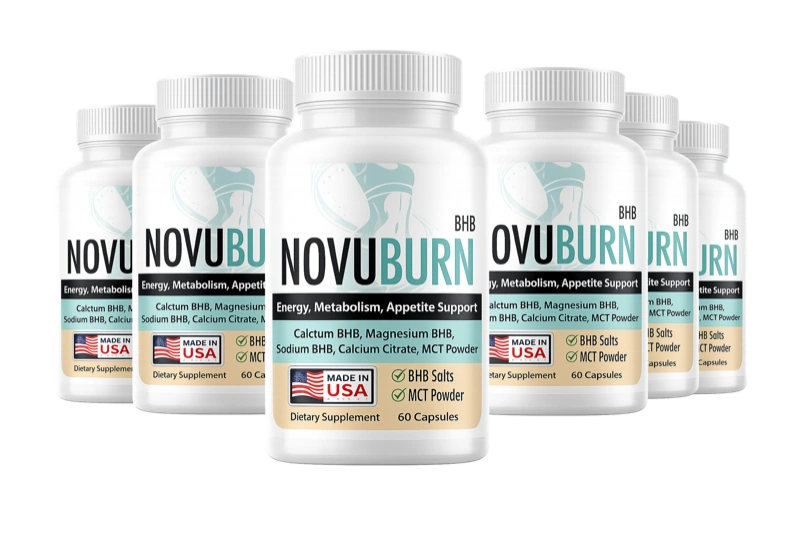
Novuburn pairs its Tri-Salt BHB complex — calcium, magnesium and sodium beta-hydroxybutyrate — with powdered MCT and a botanical stack. The six-bottle bundle is the best value at $49 per bottle, with free U.S. shipping and a 60-day guarantee.
Check today’s Novuburn pricing — from $49/bottleIs calcium citrate better than calcium carbonate for keto?
For a keto routine, calcium citrate is usually the more practical form because it does not hinge on meal timing or stomach acid. Carbonate delivers more calcium per gram and is cheaper — excellent value when taken with food. But keto patterns often involve skipped breakfasts, fasting and morning capsules on an empty stomach, all of which blunt carbonate absorption. Neither form is “bad”; citrate’s indifference to timing simply fits how people actually dose.

How much calcium do you actually need?
Most adults need about 1,000 mg of calcium per day, rising to 1,200 mg for women over 50 and everyone over 70, per the National Institutes of Health — met from all sources combined, food first. The upper limit is 2,500 mg per day (2,000 mg after 50), and pushing past it offers no extra benefit while raising the risk of constipation and, in some people, kidney stones. This is why a keto supplement should top up calcium sensibly rather than dump a megadose: if you already eat dairy or take a multivitamin, a modest, well-absorbed amount rounds out the day.
| Group | Recommended daily calcium | Upper limit |
|---|---|---|
| Adults 19–50 | 1,000 mg | 2,500 mg |
| Women 51–70 | 1,200 mg | 2,000 mg |
| Men 51–70 | 1,000 mg | 2,000 mg |
| Adults 71+ | 1,200 mg | 2,000 mg |
How to use calcium citrate sensibly on keto
Getting value from calcium citrate comes down to a few unglamorous habits:
- Count your total intake from food, water, your multivitamin and other supplements before adding more.
- Split large doses — the body absorbs calcium best in amounts near 500 mg elemental at a time.
- Pair it with magnesium, since keto depletes both and they work together in muscle and nerve function.
- Stay hydrated and mind sodium, because minerals move with water on a low-carb diet.
- Be consistent; a steady daily habit beats any single perfectly timed dose.
For the broader formula, see the full ingredients section, or compare fuel sources in our MCT oil vs powder guide.
When to talk to a doctor
Calcium citrate is generally well tolerated, but calcium is not risk-free at high intakes and interacts with several medications. Speak with a healthcare professional before adding calcium if you are pregnant or nursing, have a history of kidney stones or kidney disease, or take thyroid medication, certain antibiotics or heart medication. Calcium can reduce the absorption of some drugs, so timing may need to be separated. When in doubt, bring the label to your appointment.
Frequently asked questions
What are the main calcium citrate benefits?
Calcium citrate is a well-absorbed form of calcium that does not need stomach acid to dissolve, so it can be taken with or without food and at any time of day. It supplies a mineral that supports normal bone, muscle and nerve function, and it is gentle on digestion, which makes it a practical choice inside a daily capsule like Novuburn.
Is calcium citrate better absorbed than calcium carbonate?
Calcium citrate is absorbed roughly as well or slightly better than calcium carbonate and, unlike carbonate, does not depend on stomach acid, so it can be taken on an empty stomach and suits people on acid-reducing medication. Carbonate carries more elemental calcium per gram but must be taken with food. For a capsule taken any time of day, citrate is the more forgiving form.
Why does a keto diet increase mineral turnover?
When you cut carbohydrates, insulin falls and your kidneys release more sodium and water. That shift pulls other electrolytes, including potassium, magnesium and calcium, along with it, so a low-carb diet tends to increase mineral turnover in the first weeks. Replacing those minerals is why keto formulas pay attention to electrolytes.
How much calcium citrate does Novuburn contain?
Calcium in Novuburn is delivered as part of its Tri-Salt BHB complex, where beta-hydroxybutyrate is bound to calcium alongside magnesium and sodium. For the exact elemental calcium figure per two-capsule serving, check the current Supplement Facts panel on the label, as amounts can be updated between production runs.
Can I take too much calcium citrate?
Yes. Calcium has an upper intake level of 2,500 mg per day for most adults from all sources combined. Very high intakes can cause constipation and, in some people, kidney stones. Count calcium from food, water, other supplements and your multivitamin before adding more, and speak with your doctor if you are unsure.
Should I take calcium citrate with magnesium?
Calcium and magnesium work together in muscle and nerve function, and a low-carb diet can lower both. A blend that carries calcium alongside magnesium, as Novuburn does through its Tri-Salt BHB complex, is a sensible way to cover the two minerals keto most often depletes rather than dosing calcium alone.
See the exact dose in Novuburn →
Novuburn is a dietary supplement, not a treatment for any medical condition. These statements have not been evaluated by the Food and Drug Administration. This product is not intended to diagnose, treat, cure or prevent any disease. Always consult a qualified healthcare professional about your individual needs.
References & further reading
- National Institutes of Health, Office of Dietary Supplements. Calcium — Fact Sheet for Health Professionals. ods.od.nih.gov/factsheets/Calcium-HealthProfessional
- National Institutes of Health, Office of Dietary Supplements. Magnesium — Fact Sheet for Health Professionals. ods.od.nih.gov/factsheets/Magnesium-HealthProfessional
- Harvard T.H. Chan School of Public Health, The Nutrition Source. Calcium. nutritionsource.hsph.harvard.edu/calcium
- National Center for Biotechnology Information (NCBI) Bookshelf / StatPearls. Calcium absorption and physiology. ncbi.nlm.nih.gov/books/NBK430714
- Mayo Clinic. Calcium and calcium supplements: Achieving the right balance. mayoclinic.org/calcium-supplements
- Examine.com. Calcium — evidence-based summary. examine.com/supplements/calcium
These references describe the ingredients in general terms and do not constitute evidence that any product treats, cures or prevents any condition.
Keep reading: BHB salts explained · beat keto flu naturally · the Novuburn blog · the Novuburn review.